Axiata Arena: The 4 Sports Law Issues for Malaysia’s First Sponsored Stadium

Guest writers Richard Wee, Lesley Lim and Vincent Lim write on the ground-breaking corporate sponsorship deal for the Axiata Arena. They share on the 4 sports law issues that arise in this deal.

Introduction

Alongside the growth of the sports industry in recent times, there has been a trend for corporations and individuals of means to invest in sport stadiums through naming rights, a form of collaboration between two parties resulting in a company name being synonymous with a sporting team for a set period of time in exchange for a financial payment.

01

England has the 02 Arena while Shanghai has the Mercedes Benz Arena. Now, Malaysia has its very own multi-sport stadium, the Axiata Arena. Axiata Group Berhad has secured the exclusive sponsorship to work jointly with the Malaysia Stadium Corporation (Perbadanan Stadium Malaysia) on the redevelopment, modernisation as well as the rebranding of the Putra Indoor Stadium to Axiata Arena, making a mark in history as Malaysia’s first corporate named stadium.

A 10-year agreement worth RM55 million between the Malaysia Stadium Corporation and Axiata Group Berhad has been reached. The Malaysia Stadium Corporation will continue to be responsible for the maintenance while other upgrades will be to the extent of which Axiata had agreed upon as per the terms and conditions of the agreement.

Continue reading

Companies Act 2016: Effective 31 January 2017

The Companies Commission of Malaysia (SSM) has announced that the Companies Act 2016 will be brought into force, in stages, starting from 31 January 2017. [update: The gazette notice has been issued. Almost all of the provisions of the new Act will be brought into force on 31 January 2017. I have written about this and the 10 things to immediately prepare for.]

file-16-9-16-11-41-38-pm

There is a lot of uncertainty on which parts of the new Act will be brought into force first. What are some of the immediate changes that will be effective in two weeks’ time? I try to deal with some of these issues.

Continue reading

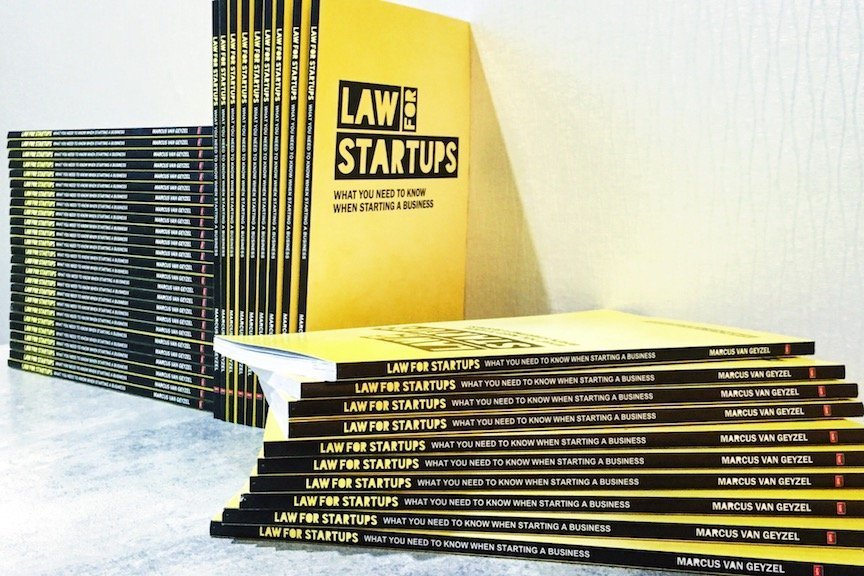
Announcing my new book “Law for Startups”—available in all major bookstores!

law-for-startups-tml

I’m delighted to announce that my new book Law for Startups: What You Need to Know When Starting a Business will be available in all major bookstores from January 2017.

I’ve worked very hard together with my publisher, MPH Group Publishing, on this book throughout 2016, and the entire process—from ideation, to securing the publishing deal, writing the manuscript and sending it through the rigorous editorial process, through to the book design resulting in the end product that will be in stores—took less than a year.

Continue reading

Turning the page: 2016-2017

Processed with VSCO with c1 preset
Photo by Marcus van Geyzel

Another year-end, and it’s time to turn the page to a new year again. Exactly a year ago, I published a post reflecting on my 2015.

It’s always useful to look back at the highlights of the year—to celebrate the victories, and to learn from the mistakes or missed opportunities—before planning for the coming year.

Continue reading

Companies Act 2016 Audit Exemption: Opposition to Exempting Small Companies

In my earlier post, I had highlighted the proposed audit exemption for dormant companies and small companies under the Companies Act 2016. This would be carried out through a Practice Directive on Audit Exemption. The Companies Commission of Malaysia (SSM)  invited feedback on this proposed move.

auditor-2
Pic from NY – http://nyphotographic.com/

SSM has now published the feedback it has received and has extended the deadline for feedback until 28 February 2017. From the feedback, there appears to be mixed views. In general, there is support for allowing dormant companies to no longer require an auditor. However, there are differing views on whether to allow audit exemption for small companies. A majority of the responses objected to such an exemption. Continue reading

Liquidators’ Conflict in Abandoned Housing Projects

Abandoned housing projects still occur in Malaysia. From 2009 to 2016, it was reported that there were 225 abandoned housing projects affecting more than 40,000 house buyers. In the worst case scenario, the housing developer may go bust and will get wound up. A liquidator is then appointed over the company.

abandoned-housing

In such a scenario, the liquidator may play a crucial role in reviving the abandoned housing project. The liquidator may be able to obtain funding from a white knight investor, or with help from the relevant ministry, the Ministry of Urban Wellbeing, Housing and Local Government.

However, the liquidator may face a conflict between two competing roles. Firstly, a liquidator undertakes duties and obligations under the Companies Act 1965 (and also under the new Companies Act 2016 when it comes into force). The liquidator’s role is to sell off the assets of the wound up company and distribute the monies to the creditors. Secondly, in an abandoned housing development, the liquidator may attempt to revive the project and to effectively carry on the duties of a housing developer, raise funds, and to collect money.

A recent Court of Appeal decision may cast some doubt on permitting a liquidator to revive an abandoned housing project.

Continue reading